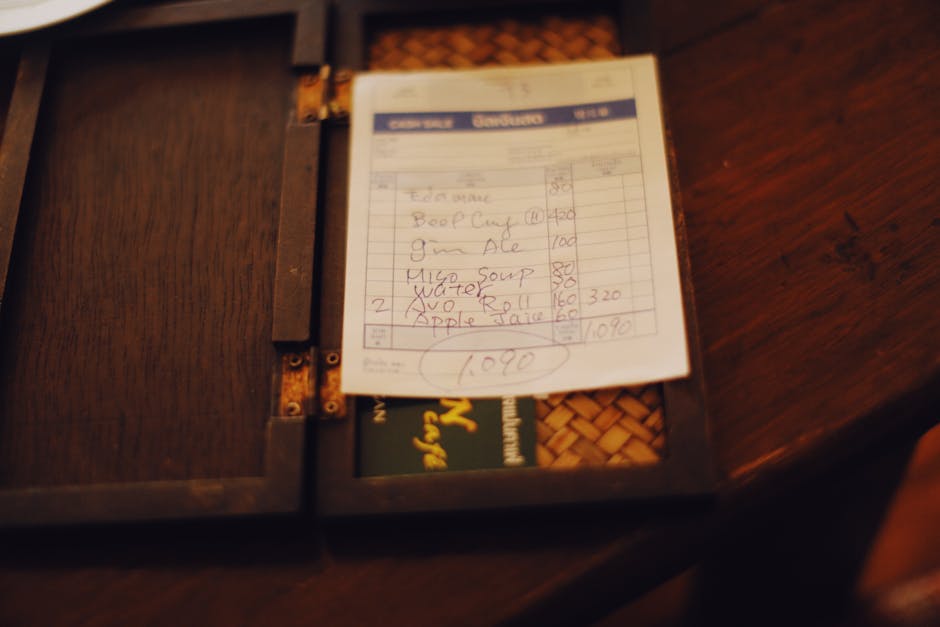
Chain convenience stores and supermarkets in Vietnam all take electronic payment. Large-format supermarkets such as AEON, Lotte Mart and Co.opmart accept foreign Visa and Mastercard at NFC terminals. Smaller convenience store tills often run cards on domestic NAPAS rails only, which leaves the QR code on the counter as the method most likely to work for a foreigner.
A bottle of water at a Hanoi Circle K costs around 10,000 VND. The till in front of you may offer three separate ways to take that money, and only one of them reliably works with what a short-stay foreigner is carrying.
The mistakes below are the ones that actually cost people money or hold up a queue at 7am. Each comes with the fix, and the order you should be weighing these things in before you reach the counter.
Three tills, three answers
The first thing to work out is which of three checkout types you are standing at, because the right payment method changes at each one. Large-format supermarkets — AEON, Lotte Mart, Co.opmart, GO!, big WinMart branches — run proper NFC card terminals that handle international Visa and Mastercard, plus Apple Pay and Google Pay. These are the easiest tills in the country for a foreigner.
Chain convenience stores — Circle K, GS25, FamilyMart, Ministop, WinMart+ — are the middle case. They all accept electronic payment, but the card terminal is frequently configured for domestic cards, and staff turnover means the person on shift may not know whether your card will go through. The QR code taped to the counter, on the other hand, is live at every single branch.
Neighbourhood mini-marts and tap hoa shops are the third case: a QR code and cash, nothing else. There is no card terminal to argue with.
So the decision order is simple. Judge the store format first, your basket size second, and what is physically in your wallet third. A 400,000 VND grocery shop at AEON and a 15,000 VND packet of biscuits at a GS25 in Hue are not the same payment problem.
Mistakes at the card terminal
Mistake one: accepting the terminal's offer to charge you in your home currency. At AEON, Lotte Mart and most international hotel-adjacent retail, the screen will ask whether you want to be billed in GBP, EUR, USD or VND. Choosing your home currency hands the conversion to the merchant's acquirer, which typically costs 3 to 7 percent more than letting your own bank do it. The fix takes one second: always press VND, every time, with no exceptions.
Mistake two: reading the card stickers on the door as a promise. A great many Vietnamese retail stickers advertise NAPAS, the domestic card switch, rather than international schemes. If you do not see the Visa or Mastercard contactless symbol specifically, treat the card terminal as a maybe rather than a yes.
Mistake three: assuming a tiny purchase can go on a card. Franchised convenience store branches commonly apply an informal minimum of around 50,000 VND for card payment, and some will simply wave you towards the QR code for anything smaller. It is not a scam and arguing rarely helps — the franchisee is protecting their margin on a 12,000 VND sale.
There is a fourth, less expensive version of the same problem: a contactless tap that silently fails above a certain value and demands a PIN your card does not have set for overseas use. If you are buying a full trolley, have a second method ready before the cashier has scanned forty items.
Mistakes with cash and the QR sticker
Mistake four: breaking a 500,000 VND note on a small purchase. A Circle K in District 1 will handle it. A mini-mart in Dong Hoi at opening time often cannot, and you end up walking out without the thing you came for. Keep your 10,000, 20,000 and 50,000 VND notes for small shops and save the 200,000 and 500,000 notes for supermarkets and hotels.
Mistake five: using the ATM parked inside the store because it is convenient. Vietnamese bank ATM fees for foreign cards typically run 22,000 to 55,000 VND per withdrawal, which works out at 3 to 8 percent on a small amount, and the machine will also try the home-currency conversion trick on its own screen. If you genuinely need cash, withdraw once and withdraw large, not three times a week in the snack aisle.
Mistake six — and this is the one that catches people for weeks rather than minutes — is seeing the MoMo or ZaloPay logo on the counter code and assuming you can download the app tonight. MoMo registration requires a Vietnamese phone number, and since Circular 41/2025 new e-wallet accounts in Vietnam require biometric verification. ZaloPay additionally wants a Vietnamese ID document. Opening a standard Vietnamese bank account needs a long-term visa, work permit or Temporary Residence Card, which rules out anyone on a 45-day exemption or a 90-day e-visa.
The practical fix is a wallet that scans those codes without needing any of the local paperwork. LocalPay is a non-custodial app that pays any VietQR merchant in Vietnam — the same code on the Circle K counter, the same code at the WinMart self-checkout — and you top it up with the Visa or Mastercard you already hold, or with Apple Pay or Google Pay. No Vietnamese SIM, no bank account, no residency card. It is on the iOS App Store and Google Play, and is backed by Colosseum. Stablecoin top-ups via USDC or USDT are there as a secondary route if that is how you hold money.
Which method actually wins, by shopper
If you hold a Temporary Residence Card and a Vietcombank, Techcombank or BIDV account, the domestic debit card in your pocket beats everything else at a Vietnamese till. It taps at the supermarket, it generates a transfer code at the convenience store, and it costs nothing. Nobody with a local account should be reading this section for advice.
If you are doing one big monthly grocery run at AEON or Lotte Mart on a travel card with no foreign transaction fee, just tap it and pick VND on the screen. That is a genuinely good answer for that specific trip, and reaching for an app instead adds a step for no gain.
The case for a QR wallet is everything in between: the daily 20,000 to 80,000 VND purchases across Circle K, GS25 and the mini-mart on your street, where card terminals are unreliable and cash means feeding ATMs. QR payment in Vietnam grew roughly 150 percent in 2025 according to the State Bank of Vietnam, and it is now the default at every till that takes electronic money at all.
Cash still earns a small place in the plan. Carry around 200,000 VND in small notes for the shops too small to have a code worth scanning, and stop treating it as your primary method.
Five things to check before you join the queue
- Look for the Visa or Mastercard contactless symbol on the terminal itself, not the NAPAS sticker on the door — the two are not the same acceptance.
- If the screen offers your home currency, press VND. Dynamic currency conversion at Vietnamese supermarket tills typically costs 3 to 7 percent.
- Expect an informal card minimum of around 50,000 VND at franchised convenience stores and have a QR option ready for anything below that.
- Keep 10,000, 20,000 and 50,000 VND notes separate from your 500,000s so you are not asking a mini-mart to break a large note at 7am.
- Skip the ATM inside the store. At 22,000 to 55,000 VND per withdrawal, small top-ups are the most expensive cash in Vietnam.
Shopping in Vietnam is only confusing if you treat every till the same. Work out the store format, size up the basket, then pick your method: tap at the big supermarkets, scan at the convenience stores, and keep small notes for the shops that have neither a terminal nor a screen.
If you are here on a tourist visa and spending most days in convenience stores rather than hypermarkets, set up LocalPay before your first shop. Top it up with the card already in your wallet, scan the code on the counter, and you stop depending on whether this particular branch has its card terminal switched on for international schemes.
Frequently asked questions
Many Circle K branches in Ho Chi Minh City and Hanoi accept international Visa and Mastercard, but acceptance varies by franchisee and some branches apply an informal minimum spend of around 50,000 VND. Every Circle K accepts QR payment, which is the more reliable method for small purchases. Check the terminal for the Visa contactless symbol rather than relying on the door stickers.
Large-format supermarkets in Vietnam including AEON, Lotte Mart, Co.opmart and GO! run NFC terminals that accept Apple Pay and Google Pay. Smaller convenience stores and neighbourhood mini-marts usually do not, because their tills are built around QR payment and domestic NAPAS cards. Apple Pay and Google Pay cannot be used to scan a Vietnamese merchant QR code directly.
Only if the tourist already has a Vietnamese phone number, because MoMo registration requires one, and new e-wallet accounts in Vietnam require biometric verification under Circular 41/2025. ZaloPay goes further and requires a Vietnamese ID document. Most short-stay visitors cannot register either app and need a wallet that works without local documentation.
Card is usually cheaper if you decline dynamic currency conversion and your card has no foreign transaction fee, because getting the cash in the first place costs 22,000 to 55,000 VND per ATM withdrawal plus your home bank's charges. Cash only wins at shops too small to accept electronic payment at all. Vietnamese supermarkets do not add a surcharge for card payment.
Use a non-custodial wallet such as LocalPay, which scans Vietnamese merchant QR codes and is funded with an international Visa or Mastercard, Apple Pay, Google Pay or stablecoins. It requires no Vietnamese bank account, no local SIM card and no Temporary Residence Card, which matters because standard Vietnamese bank accounts are only available to people holding a long-term visa, work permit or residence card.