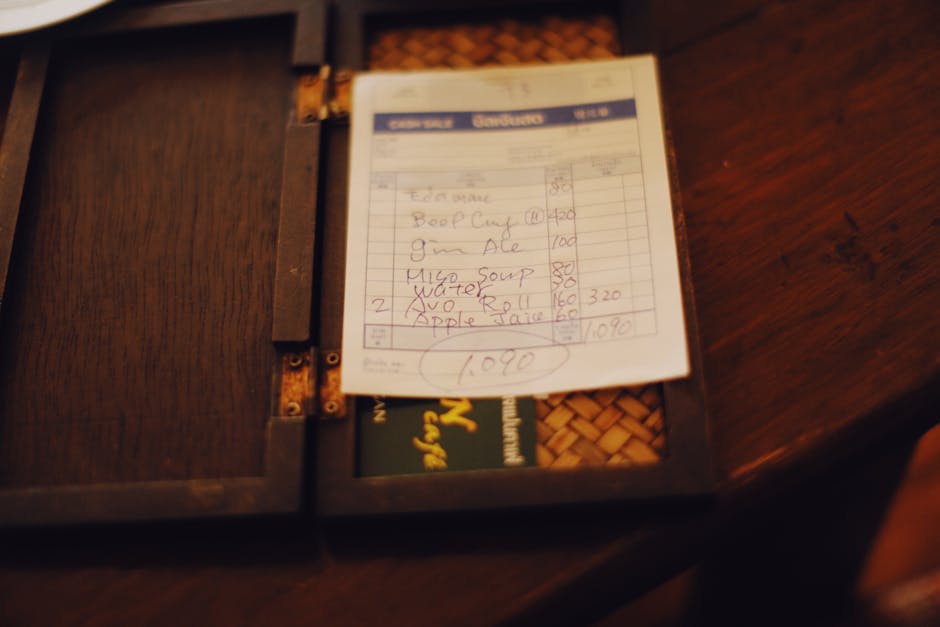
Vietnamese restaurants almost never print separate checks, but you can still split at the table. If the venue displays a printed QR standee, each diner scans the same code and types in their own share. If the code is generated by the till with the amount locked, one person pays the full total and the others repay them directly.
Six people, one hotpot, one printed slip. The kitchen will not divide it, and asking for six checks will get you a polite, confused smile — Vietnamese restaurants are set up for one bill and one payer.
What has changed is the payment step, not the billing step. With QR acceptance now near-universal in Vietnamese restaurants, a table of six can often pay six times against the same code, which makes the old ritual of counting out 100,000 VND notes and arguing about change unnecessary.
The shift that made table-splitting possible
QR payment volume in Vietnam grew roughly 150% during 2025, according to the State Bank of Vietnam, and the printed code on the counter has become the default way restaurants take non-cash money. The standard behind it is VietQR, managed by NAPAS and standardised across more than 40 Vietnamese banks, which is why the same sticker works for every domestic app.
Card terminals never reached the same density in mid-range Vietnamese restaurants, and they are the reason splitting used to be impossible. A terminal takes one card, one amount, one receipt. A printed code takes as many separate payments as there are people willing to scan it.
The social custom has not moved much. In Vietnamese groups it is still normal for one person — usually the host, the eldest, or whoever invited everyone — to settle the whole bill, with friends repaying later or simply taking their turn next time. Among foreign travellers splitting at the table is now the path of least friction, but do not assume your Vietnamese colleagues want to do it that way.
Static standee or till-generated code: the difference decides everything
A static code is the laminated card or acrylic standee taped to the counter or the wall. It carries the restaurant's account details but no amount, so the payer types the figure in. That is the version you can split.
A dynamic code is printed on the slip or shown on a screen by the till, with the total already encoded. Scanning it fills in the amount automatically and you cannot edit it down to your share. Restaurants using proper point-of-sale systems — chain pho shops, mid-range Saigon and Hanoi restaurants, anywhere that prints an itemised receipt — usually generate these.
So look before you plan. If the slip has a code printed on it and there is no separate standee by the register, accept that one person is paying and sort the rest out between yourselves afterwards.
The part that catches foreign groups out
Repaying the friend who paid is where the problem usually lands, not the restaurant. A Vietnamese diner sends the money back by instant bank transfer in seconds, free of charge. A tourist on a 45-day exemption or a 90-day e-visa has no Vietnamese account to send from, because standard accounts require a long-term visa, a work permit or a Temporary Residence Card.
The obvious workaround, MoMo, is not really open to short-stay visitors. It requires a Vietnamese phone number, and since Circular 41/2025 new e-wallet registrations in Vietnam also require biometric verification. If you already live here with a local number and a domestic account, MoMo is genuinely excellent for splitting with Vietnamese friends and you should use it.
For everyone else the practical answer is to stop owing anyone anything — pay your own share straight to the restaurant. LocalPay is a non-custodial wallet built for exactly that: it pays any VietQR merchant in Vietnam, and it works without a Vietnamese bank account, a local SIM or a residency card. You top it up with the Visa or Mastercard you already carry, or with Apple Pay or Google Pay, and stablecoins such as USDC and USDT if that is how you hold money.
The reason that matters at a dinner table is timing. You can scan the counter standee, enter 235,000 VND for your portion, and be done before the person next to you has finished working out whether they owe 235 or 240.
When one person should just pay the lot
Cash-only restaurants exist, particularly family-run com binh dan spots and older market kitchens. There is no QR layer to split against, so nominate one payer with cash and settle up later. The same goes for set banquet menus where the price is per head and the arithmetic is trivial anyway.
Repeated small payments to the same account within a minute can also look odd to staff who are watching notifications come in. In a group of eight, two or three payers covering their subgroups is smoother than eight separate transfers, and the restaurant will thank you for it.
“A card terminal takes one card, one amount, one receipt. A printed code takes as many separate payments as there are people willing to scan it.”
Step-by-step
Four things that decide whether a table split goes smoothly
- Do it at the counter, not at the table. Standees are almost always by the register, and staff can watch the payments land as they arrive rather than chasing four mystery transfers.
- Keep one person's cash in reserve. If a single payment fails mid-split, covering the remainder with a 200,000 VND note is faster than restarting the whole sequence while the restaurant waits.
- Never split by scanning a code printed on the receipt. The total is embedded in it, and a second person scanning the same dynamic code risks paying the whole bill twice.
- Avoid solving the problem with an ATM run. Vietnamese bank withdrawal fees typically run 22,000 to 55,000 VND per transaction, which can work out at 3 to 8% on the small amounts people usually pull out for a dinner.
Splitting a bill in Vietnam is no longer an argument about cash and change — it is a two-second check of which code the restaurant is using. Static standee means everyone pays their own share; till-printed code means one payer and a settle-up afterwards.
The piece worth sorting before your first group dinner is your own ability to scan. LocalPay is on the iOS App Store and Google Play, is backed by Colosseum, and leaves you in control of your own funds as a non-custodial wallet — top it up on arrival and you will never be the person at the table saying you will get the next one.
Frequently asked questions
Vietnamese restaurants almost never issue separate checks, and most kitchens and tills are not set up to produce them. The normal practice is one itemised bill per table, paid by one person, with the group settling up between themselves afterwards or each diner paying their own share against the restaurant's printed QR code.
Vietnamese diners repay each other by instant domestic bank transfer, which is free and takes seconds, but that requires a Vietnamese bank account — and standard accounts need a long-term visa, work permit or Temporary Residence Card. Tourists cannot open one, so the practical options are handing over cash in 50,000 and 100,000 VND notes, or avoiding the debt entirely by paying your own share directly to the restaurant with a wallet such as LocalPay.
Yes, if the code is a static standee displayed at the counter, because static codes carry no amount and each payer types in their own figure. Codes generated by the till and printed on the receipt have the total encoded and cannot be edited, so only one person can use them.