Large supermarket chains in Vietnamese cities — Lotte Mart, AEON, GO!, Co.opmart — accept contactless foreign Visa and Mastercard at NFC terminals. Smaller chains such as Bach Hoa Xanh, WinMart+ and Co.opFood in provincial towns typically accept only QR payment and cash. QR is the one method that works in both places, which makes it the safer default.
A Lotte Mart checkout in Ho Chi Minh City will take a contactless Visa without a pause. A Bach Hoa Xanh in a Mekong Delta town ninety minutes down the road will take a QR code and banknotes, and in practice nothing else.
That gap is the whole decision. Most advice for foreigners assumes you will stay inside the mall-and-chain-cafe belt of District 1, Tay Ho or An Thuong, where the terminals are new and the staff have seen a foreign card before. Spend a week in Ben Tre, Pleiku or Mai Chau and the arithmetic changes completely.
The three realistic options at a Vietnamese grocery till
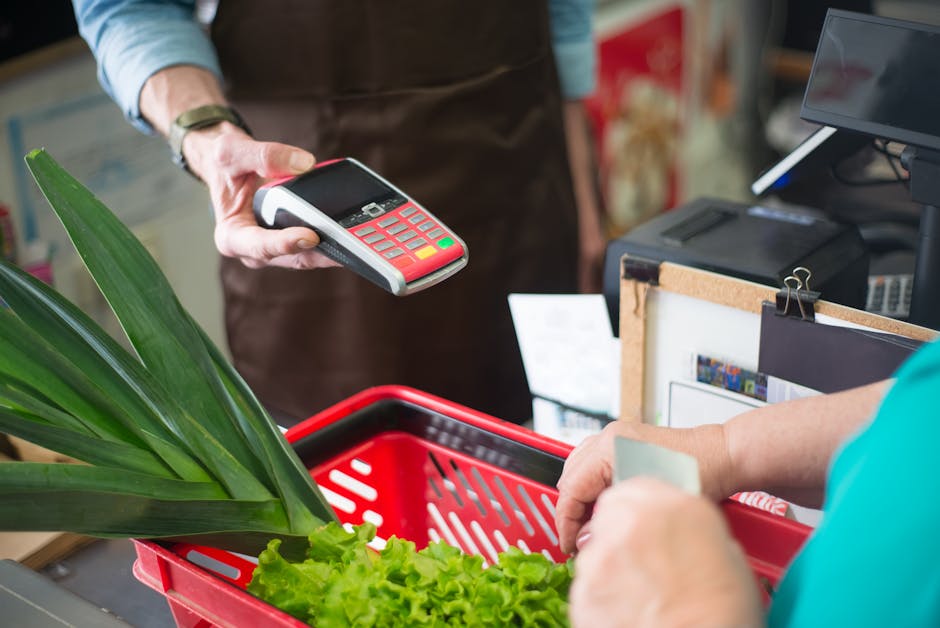
Option one is a foreign contactless card, either the physical card or the same card loaded into Apple Pay or Google Pay. This only works where there is a physical NFC terminal wired to an international acquiring network — the big-format supermarkets, mall food halls, and most Circle K, GS25, FamilyMart and Ministop branches in the two big cities.
Option two is QR payment. Vietnam's national standard, VietQR, is managed by NAPAS under the State Bank of Vietnam and is standardised across more than 40 Vietnamese banks, which is why the same printed code at the till works for a customer banking with Vietcombank, Techcombank or MB. The State Bank of Vietnam recorded a 150 percent surge in QR payment volume during 2025.
Option three is cash, which always works and is the only thing that works at a family-run tap hoa shop. The cost is the cash machine: Vietnamese bank ATMs charge roughly 22,000 to 55,000 VND per withdrawal, and once your home bank's foreign transaction loading is added, a small withdrawal can land at 3 to 8 percent before you have bought anything.
City tills: everything works, so compare the cost instead
In Ho Chi Minh City, Hanoi and central Da Nang, the question is not whether your card will be accepted at a Co.opmart or an AEON. It is what the acceptance costs you.
The main leak is dynamic currency conversion. The terminal will offer to charge you in GBP, EUR or USD instead of VND, and the exchange rate baked into that offer is set by the acquirer, not your bank. Always press the VND option. A 900,000 VND grocery shop converted at the terminal can cost several percent more than the same shop charged in dong.
The second leak is smaller and easier to miss: some independent minimarts and franchised convenience stores apply a surcharge on card payments, usually around 2 to 3 percent, and some set a minimum spend of 50,000 or 100,000 VND before they will run a card at all. Neither applies to QR, because the merchant pays essentially nothing to receive it.
Vietnamese e-wallets are the obvious-sounding alternative here, and for residents they are excellent. MoMo requires a Vietnamese phone number, ZaloPay wants a Vietnamese ID document as well, and under Circular 41/2025 new e-wallet registrations in Vietnam require biometric verification against a Vietnamese identity record. A tourist on a 45-day exemption or a 90-day e-visa is not getting through that.
Past the provincial capital, the terminal disappears before the QR code does
Drive out to a district town and the retail mix changes. The international-format hypermarket is gone. What remains is Bach Hoa Xanh, Co.opFood, WinMart+, a handful of unbranded minimarts, and the wet market. Bach Hoa Xanh alone operates well over a thousand stores concentrated in southern provinces and the Delta, and for many towns it is the nearest thing to a supermarket.
At those stores the till is a tablet or a small printer, and the payment infrastructure is a static or dynamic QR code plus a cash drawer. Card terminals exist in some urban branches, but treat them as a bonus rather than a plan. Staff in a small town have genuinely never processed a foreign card and will not want to start with your trolley of instant noodles behind six people in the queue.
This is the point where foreigners hit the wall. QR runs on Vietnamese bank accounts and domestic banking apps, and standard Vietnamese accounts require a long-term visa, work permit or Temporary Residence Card. A foreign Visa or Mastercard, including the version living in Apple Pay or Google Pay, cannot scan and settle a Vietnamese QR code — those credentials only work at NFC hardware, which is exactly the hardware the rural store does not have.
LocalPay is built for that exact gap. It is a non-custodial wallet — your funds stay under your control — that pays any VietQR merchant in Vietnam, and it needs no Vietnamese bank account, no local SIM, no residency card and no Vietnamese ID. You top it up with the Visa or Mastercard you already carry, or through Apple Pay or Google Pay, and then pay the Bach Hoa Xanh code the same way the woman ahead of you in the queue does. Stablecoin top-ups in USDC or USDT are there as a secondary route for people who already hold them.
The verdict
QR wins, and it is not close. It is the only method that behaves identically at a Lotte Mart in Thu Duc and a Co.opFood in Chau Doc, it carries no merchant surcharge, no minimum spend and no dynamic currency conversion trap, and it removes the ATM fee from your grocery budget entirely. Set it up before you need it, not in the queue.
Give the foreign card its due, though. If your trip is Hanoi Old Quarter to Ha Long Bay to Hoi An old town and back, staying in international hotels and shopping in mall supermarkets, a contactless card with no foreign transaction fee is genuinely the simplest thing in the world and you may never need anything else. There is no reason to install an app for a five-day stay inside that bubble.
Cash stays in the plan, but as a third-place instrument rather than a backup for QR. Carry 300,000 to 500,000 VND in small notes — 10k, 20k and 50k — for the wet market, the tap hoa and the odd parking attendant. Do not carry a week of grocery money because you are worried the QR will fail; a Vietnamese shop that takes electronic payment at all takes QR, and one that does not is cash-only regardless of what is in your wallet.
Five things worth checking at the checkout
- If the terminal asks whether to charge in your home currency or VND, choose VND every time — the terminal's own conversion rate is set by the acquirer and is consistently worse than your card issuer's.
- Look for the small NAPAS logo on the till sticker; it tells you the code is a standard Vietnamese QR rather than a single-wallet-only code.
- Check for a card surcharge sign before you reach the front of the queue in independent minimarts — 2 to 3 percent on card is common and is almost never applied to QR.
- Break 500,000 VND notes at supermarkets and chain convenience stores, where the float is deep, so you are not handing one to a market stall that cannot change it.
- In provincial towns, assume the Bach Hoa Xanh or Co.opFood is QR-and-cash only and arrive ready for that, rather than discovering it with a basket in your hand.
The city-versus-country split is really a split between hardware and standards. Cities have NFC hardware, so your foreign card works there and nowhere else. The whole country has a single QR standard, which is why the same payment method covers a Hanoi hypermarket and a one-fridge minimart in Dong Van.
If your itinerary leaves the big three cities at any point, install LocalPay from the iOS App Store or Google Play before you go, top it up with your usual card, and test it on a small purchase while you are still somewhere with good signal. It is backed by Colosseum, it keeps you in control of your own money, and it means the grocery run in a Delta town works exactly like the one in Saigon.
Frequently asked questions
Bach Hoa Xanh stores reliably accept cash and QR payment at every branch, but card acceptance is inconsistent and should not be relied on outside large cities. Foreigners shopping at Bach Hoa Xanh in provincial towns should plan to pay by QR or in VND cash. A card terminal, if present, is a bonus rather than the expected payment route.
Yes, Apple Pay and Google Pay work at Co.opmart, Lotte Mart, AEON and GO! branches in Vietnamese cities, because those stores run NFC-capable terminals connected to international card networks. Apple Pay and Google Pay cannot be used to pay a Vietnamese QR code, which runs on domestic bank rails instead. In small-town grocery stores with no NFC terminal, neither will work.
Vietnamese e-wallets such as MoMo and ZaloPay require a Vietnamese phone number, and ZaloPay also requires a Vietnamese ID document, so most short-stay visitors cannot register for them. Circular 41/2025 added biometric verification for new e-wallet registrations in Vietnam from 2026. A wallet such as LocalPay pays Vietnamese QR codes without a local SIM, bank account or residency card.