Grab in Vietnam accepts cash on every ride, and an international Visa or Mastercard can be linked to pay fares directly. Grab's in-app wallet is the part that fails for foreigners: topping it up needs a Vietnamese bank card. First-timers get caught by big banknotes and declined top-ups; repeat visitors keep small notes and a QR wallet ready.
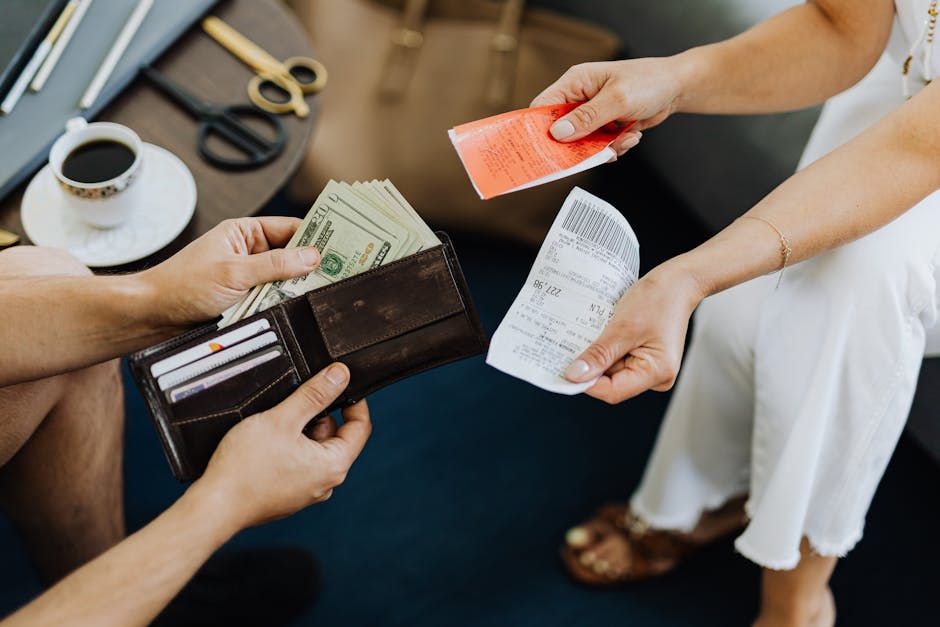
A 42,000 VND Grab ride, paid with a 500,000 VND note, at 6am outside a hotel in District 1. The driver shrugs, holds up his phone with a bank QR code on the screen, and you have nothing that can scan it. That is the single most common Grab payment failure a first-time visitor to Vietnam will have.
None of these problems are Grab's fault, and none of them are hard to avoid once you know where they sit. The difference between a first trip and a fifth is not knowledge of the app — it is five minutes of payment setup done before you land.
Mistake 1: Assuming a linked card means every Grab service is paid for
Grab Vietnam distinguishes between paying a fare with a linked card and loading money into its in-app wallet. International Visa and Mastercard credit and debit cards generally work for the first and generally fail for the second.
That distinction bites the moment you move beyond rides. A GrabFood order from a small restaurant, a GrabMart delivery or a tipped driver may push you toward wallet balance, and the wallet top-up screen is where foreign cards get declined.
The first-timer discovers this at 9pm with a hungry group and an order that will not go through. The returning visitor treats the wallet as if it does not exist, pays fares by card or cash, and never tries to load it.
If you do want a local wallet, note that Vietnam now requires biometric verification for new e-wallet registration under Circular 41/2025, on top of the Vietnamese phone number and ID document those apps already demanded. For a 45-day visa exemption or a 90-day e-visa, that door is shut.
Mistake 2: Paying a 40,000 VND fare with a 500,000 VND note
Vietnamese notes come in 10k, 20k, 50k, 100k, 200k and 500k VND, and ATMs dispense the top end of that range. A machine that gives you 2,000,000 VND will hand it over as four 500k notes, which is useless for a short Grab ride.
Grab drivers in Vietnam carry change, but not much of it, and not at the start of a shift. Hand over 500k for a 42,000 VND fare and you will often get an apologetic look, a conversation in two languages, and a wait while the driver walks into a shop.
The fix on trip one is mechanical: break big notes early, at a supermarket or a convenience store, and keep a working float of 10k, 20k and 50k notes separate from your main cash. Two hundred thousand in small notes covers a day of short rides.
The fix on trip five is to stop needing cash for this at all, which is the next mistake.
Mistake 3: Not being able to scan the driver's QR code
When neither of you has change, a Vietnamese Grab driver will almost always show you a bank QR code on their phone. That code is a standard VietQR payment code, the national standard run by NAPAS and the State Bank of Vietnam across more than 40 Vietnamese banks, and it is how the driver would settle with any local passenger.
Here is the trap. Those codes run on Vietnamese bank accounts and domestic apps, so a foreign Visa or Mastercard cannot reach them, and neither can Apple Pay or Google Pay — those only work at NFC terminals in hotels, malls, supermarkets and chain cafes. A Grab driver's phone is not an NFC terminal.
This is the point where a non-custodial QR wallet earns its place. LocalPay is designed for exactly this gap: you top it up with the Visa or Mastercard you already carry, or with Apple Pay or Google Pay, and then pay any merchant QR code in Vietnam by scanning it. No Vietnamese bank account, no local SIM card, no Temporary Residence Card.
It is also the thing that makes the rest of a Vietnam trip stop depending on cash withdrawals, which matters given Vietnamese ATM fees of roughly 22,000 to 55,000 VND per transaction before your own bank adds anything.
Mistake 4: The card verification code that goes to a phone you left at home
Linking an international card to Grab often triggers a 3-D Secure check from your issuer. That verification frequently arrives as an SMS to your home mobile number — the one in a SIM tray in a drawer in Manchester.
First-timers try to do this in the arrivals hall at Tan Son Nhat or Noi Bai, on airport wifi, with a taxi queue growing. The card link fails, they give up, and they pay cash for the next two weeks.
Do the card link at home, a few days before you fly, where the SMS reaches you. If your bank uses in-app approval rather than SMS, make sure that app is installed and logged in on the phone you are actually bringing.
Repeat visitors go further and switch their bank to push-notification approval before travelling, because roaming SMS delivery into Vietnam is unreliable enough to ruin a payment at the worst moment.
Mistake 5: Treating cash as the fallback when it is sometimes the right answer
Cash genuinely wins in one situation: your first ride, within an hour of landing, before any app setup is done. Grab accepts cash on every ride in Vietnam, it needs no verification, and no payment method can be declined.
Where cash stops winning is at volume. Four Grab rides a day across a two-week trip is a lot of small notes, and feeding that from ATM withdrawals means paying 3 to 8 percent in total fees on small amounts once your home bank's charges are included.
The honest split most experienced visitors land on: cash for the airport run and for the first day, a linked card for metered fares after that, and a scannable wallet for the moments when a driver, a restaurant or a shop wants a QR payment and nothing else will do.
What the fifth-trip version of your phone looks like
Someone on their fifth trip to Vietnam lands with a data eSIM already active, an international card linked to Grab and verified before departure, a QR wallet funded, and about 500,000 VND in small notes in a separate pocket. Setup time, done at home: under fifteen minutes.
That combination removes every failure in this article. The card covers in-app fares, the QR wallet covers the driver-to-passenger transfers and the thousands of Vietnamese merchants that take electronic payment, and the small notes cover the rare cash-only moments.
It also reflects where Vietnam has actually gone. QR payment adoption rose 150 percent during 2025 according to the State Bank of Vietnam, and in practice a Vietnamese vendor is either cash-only or takes a QR code. Planning for a third option wastes your time.
The 15-Minute Grab Setup to Do Before You Fly
- Link your Visa or Mastercard to Grab at home, where the 3-D Secure SMS from your issuer can actually reach your phone.
- Install a QR payment wallet and fund it before departure, so a driver's bank QR code is never a problem you solve at the kerb.
- Set your Grab account's default payment to cash for day one, then switch to card once you have confirmed the card is accepted on a real fare.
- Buy something cheap at a Circle K or WinMart on arrival with a 500,000 VND note purely to generate 50k and 20k notes for short rides.
- Save your hotel address in Vietnamese in Grab's saved places, because address confusion costs more time than any payment problem.
The first-time version of paying for Grab in Vietnam is cash, big notes, and a slightly awkward wait while the driver finds change. The returning version is quieter: a verified card for fares, small notes for the odd cash-only moment, and the ability to scan whatever code gets held up to you.
If you only fix one thing before your next trip, fix the scanning gap. Download LocalPay from the App Store or Google Play, top it up with the card in your wallet, and the driver's QR code stops being a problem — along with every other Vietnamese merchant who would rather you scanned than counted.
Frequently asked questions
Yes. Cash is accepted on every Grab ride in Vietnam and requires no app setup or card verification, which makes it the most reliable option for a visitor's first journey from the airport. Carry 10,000, 20,000 and 50,000 VND notes, because drivers rarely have change for a 500,000 VND note on a fare under 100,000 VND.
International Visa and Mastercard credit and debit cards can generally be linked to a Grab account in Vietnam and used to pay ride fares directly. The step that commonly fails for foreigners is topping up Grab's in-app wallet, which typically requires a Vietnamese bank card. Link and verify the card before you travel, because the issuer's verification code is often sent to your home mobile number.
In practice, no. Grab's in-app wallet in Vietnam is funded through Vietnamese bank cards and local banking channels, and new e-wallet registrations in Vietnam also require biometric verification under Circular 41/2025 plus a Vietnamese phone number. Tourists on a 45-day visa exemption or a 90-day e-visa cannot meet those requirements and should pay Grab fares by cash or linked card instead.
The driver is showing a VietQR bank code, which is how Vietnamese passengers settle a fare when neither party has change. Foreign cards, Apple Pay and Google Pay cannot pay those codes directly, so you need either exact cash or a QR wallet such as LocalPay that is topped up with your existing card and can scan any merchant code in Vietnam.