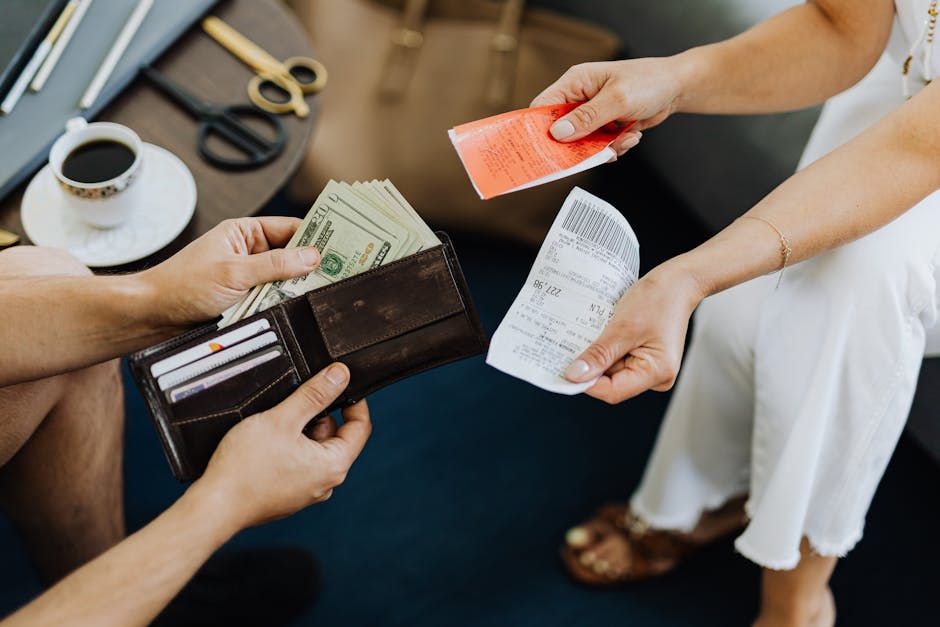
Most Ha Giang Loop operators take payment in full at their office in Ha Giang City on check-in morning, not online in advance. Motorventures, for example, collects the fare at check-in with no deposit required. Prepay online only if you need a guaranteed seat in peak season or want card dispute rights; otherwise settle locally by QR.
Motorventures lists 3,400,000 VND per person for its two-day, one-night Ha Giang Loop, 4,850,000 VND for four days and three nights, and 8,000,000 VND for the five-day, four-night version. None of those figures has to leave your account before you arrive. Payment is collected at the office in Ha Giang City when you check in.
That single fact changes the shape of the decision. The question is not really online versus on arrival — it is what you are buying protection against, and whether you can actually settle a seven-figure VND bill at a small office counter at 7am without a Vietnamese bank account.
The order to decide in
Start with scarcity, not payment. Ask the operator directly whether your dates are tight — September to November is the dry, clear, busiest stretch on the loop, and a popular operator can genuinely run out of bikes and rider capacity. If they confirm availability with no deposit, there is nothing to pay for in advance and prepaying buys you nothing.
Second, pin down what the quoted price covers. Self-drive and easy rider (you ride pillion behind a local driver) are priced differently, and petrol, site entry tickets and drinks are commonly excluded. A 4,850,000 VND quote that excludes fuel is a different number from one that includes it.
Third, ask what the office counter accepts on the day — QR, cash, or a card machine. Small operators in Ha Giang City often have no card terminal at all.
Only then decide how you will fund it. That is the order, and most travellers reverse it, booking and paying through a platform before checking whether their dates were ever at risk.
What the office till in Ha Giang City actually takes
The typical sequence is a night sleeper bus out of Hanoi, arrival in Ha Giang City around 5am to 6am, breakfast, a briefing, then payment at the desk before bikes are handed over. You are settling the full fare in Vietnamese dong, in person, within an hour or two of waking up on a bus.
QR is the default. Vietnam's national QR standard, VietQR, is managed by NAPAS and the State Bank of Vietnam and is standardised across more than 40 Vietnamese banks, and the State Bank recorded QR payment adoption rising 150 per cent in 2025. A tour office that takes any electronic payment at all takes a scanned code.
The problem is that foreign Visa and Mastercard cards, Apple Pay and Google Pay cannot connect to that system. They work at NFC terminals in international hotels and chain supermarkets, not at a motorbike tour desk. Standard Vietnamese bank accounts need a long-term visa, work permit or Temporary Residence Card, so anyone on a 45-day exemption or 90-day e-visa is shut out, and MoMo and ZaloPay both require a Vietnamese phone number, with biometric verification now mandatory for new e-wallet registration under Circular 41/2025.
This is the point where LocalPay earns its place. It is a non-custodial wallet you top up with the Visa or Mastercard already in your pocket, or with Apple Pay or Google Pay, and it pays any QR merchant in Vietnam — including the tour office counter. No Vietnamese bank account, no local SIM, no residency card, no Vietnamese ID. Stablecoin top-ups (USDC or USDT) are there as a secondary route if you prefer them.
When prepaying by card online is genuinely the better call
There is one argument for prepaying that holds up: dispute rights. A deposit charged to a Visa or Mastercard credit card through a booking platform gives you a chargeback route if the operator folds, changes the itinerary or never shows. Cash handed across a counter in Ha Giang City gives you nothing but a receipt and a phone number.
If you are booking from abroad for fixed dates in high season, travelling as a group of six or more, or using a tour as the anchor of a tight itinerary, pay a deposit online and accept the platform's markup as the price of certainty.
For everyone else, paying at the office is cleaner. You see the bikes before money moves, you are quoted in dong rather than converted twice, and operators who ask for nothing upfront are signalling confidence rather than desperation.
The spending that sits outside the tour price
The fare is the easy part. Over three or four days you will also pay for petrol top-ups, bottled water and beer at homestays, small site entry tickets in the tens of thousands of dong, laundry, coffee stops on the Ma Pi Leng pass, and — if you rode pillion — a tip for your driver at the end.
ATM withdrawals are a poor way to cover all of it. Vietnamese bank ATM fees typically run 22,000 to 55,000 VND per transaction before your home bank's own charges, and on the small amounts people actually withdraw the total cost lands somewhere between 3 and 8 per cent. Doing that twice in Ha Giang City to assemble a 4,850,000 VND fare is an expensive way to start a trip.
One practical constraint worth knowing: scanning a code needs a working data connection, and mobile coverage on the northern sections of the loop is patchy in valleys and inside stone homestays. Keep a few 50,000 and 100,000 VND notes for the handful of moments when nobody's phone has signal.
Note too that since the 2025 provincial reorganisation, Ha Giang sits administratively within Tuyen Quang province. Booking listings and maps may show either name — it is the same place and the same loop.
Six things to settle before the night bus leaves Hanoi
- Ask the operator in writing whether a deposit is required and whether the balance is cash-only — some offices quote one thing on WhatsApp and another at the desk.
- Confirm in the same message whether petrol is included. On a four-day self-drive loop, fuel is a meaningful line item.
- Check your licence position before paying anything. Self-drive on anything above 50cc requires an appropriate Vietnamese licence or an International Driving Permit with the right category, and insurance follows from that.
- Have your wallet app installed, verified and topped up before you board the bus — not at 6am in a tour office with one bar of signal.
- Carry roughly 500,000 VND in mixed small notes for homestay drinks, roadside coffee and anywhere the signal dies.
- Photograph the handwritten receipt the office gives you. If you later dispute a damage charge against your deposit, that paper is the whole of your evidence.
The decision, then, is narrower than it first looks. Unless peak-season scarcity or group size pushes you towards a platform deposit and its dispute protection, paying the operator directly at the Ha Giang City office is cheaper and gives you sight of the bikes before money changes hands.
What that leaves is the funding question: how a tourist with no Vietnamese bank account settles a 4,850,000 VND bill by QR at 7am. Install LocalPay before you travel, top it up with the card you already carry, and you can scan the office code the way a local would — then pay for petrol, homestay beers and coffee on the Ma Pi Leng pass the same way. It is on the iOS App Store and Google Play, and the company is backed by Colosseum.
Frequently asked questions
Most Ha Giang Loop operators do not require a deposit and hold bookings by message, collecting the full fare when you check in at their office in Ha Giang City. Motorventures is one example of an operator that takes payment at check-in rather than online in advance. In peak months from September to November, a deposit may be requested to guarantee a bike.
Published Motorventures prices are 3,400,000 VND per person for the two-day, one-night loop, 4,850,000 VND for four days and three nights, and 8,000,000 VND for five days and four nights. Those figures usually cover the bike or rider, homestay accommodation and most meals. Petrol, drinks, site entry tickets and driver tips are generally extra.
Few independent tour offices in Ha Giang City have card terminals, so a foreign Visa or Mastercard is unlikely to work at the counter. Booking platforms accept foreign cards online and give you chargeback rights, but usually add a markup. The practical local options at the desk are cash or a scanned QR payment.
Yes — homestays in Dong Van, Du Gia, Meo Vac and Yen Minh that take any electronic payment take VietQR, because it is the national standard managed by NAPAS and the State Bank of Vietnam. The constraint is mobile signal rather than acceptance. In deep valleys where data drops out, cash is the fallback, so keep small notes in reserve.
Ha Giang City and Dong Van have ATMs, but machines in smaller towns such as Meo Vac and Yen Minh can be out of cash or out of service, particularly at weekends and around public holidays. Vietnamese bank withdrawal fees typically run 22,000 to 55,000 VND per transaction. Sorting your payment method before leaving Hanoi avoids relying on any of them.