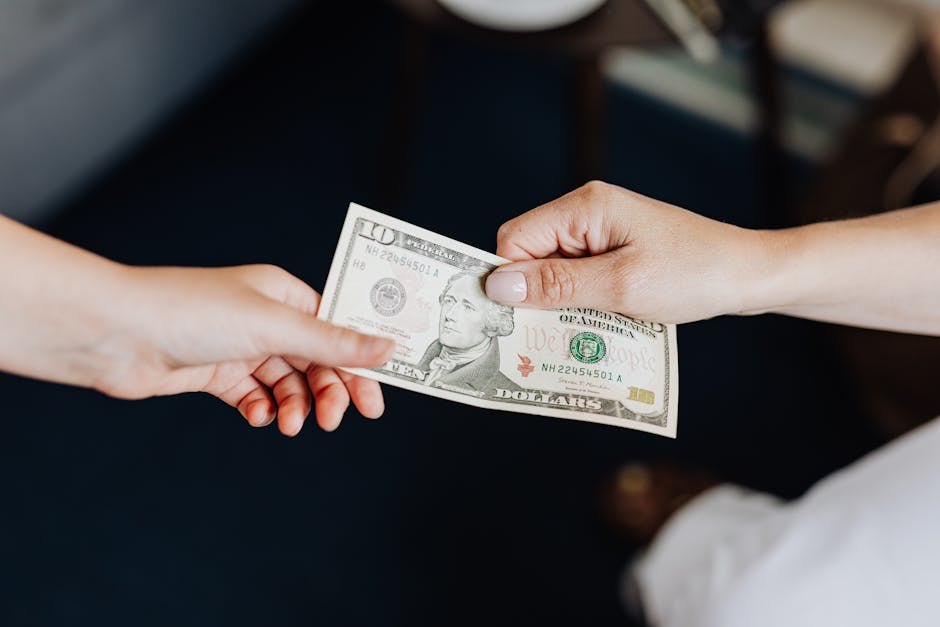
Around 500,000 VND in 10,000, 20,000 and 50,000 VND notes covers roughly a week of tipping for most travellers in Vietnam. Typical amounts are 20,000 to 50,000 VND for a haircut, 10,000 to 20,000 VND per bag for a hotel porter, and 10 to 15 percent of the price for a private tour guide. Vietnamese people rarely tip in restaurants or taxis.
Watch a Vietnamese family finish lunch at a quán cơm in District 3 and you will not see a tip. The change goes back in the purse, the plastic stools get pushed in, nobody looks uncomfortable about it.
Then read almost any English-language guide to Vietnam and you will be told to leave 10 percent everywhere. Both things are true at once, which is why tipping here is confusing — and why the practical question is not whether to tip but how to keep the right notes on you when every other payment you make is a QR scan.
What Vietnamese people actually tip for
Tipping in Vietnamese restaurants, cafés and metered taxis is not a local custom. A Vietnamese customer might wave away small change or leave a 5,000 VND coin's worth behind, but there is no social penalty for leaving nothing, and no waiter will chase you down the street.
The places where Vietnamese people do tip are specific and personal: massage therapists and spa staff, a hairdresser who did a good job, a private driver hired for a multi-day trip, and hotel staff who physically carry something for you. Tipping follows effort by a named individual, not a transaction at a till.
There is also lì xì, the red envelope of cash given during Tet. Tet falls on 17 February 2026, and in the weeks around it a small envelope for a doorman, a regular grab driver or a long-term housekeeper is entirely normal — a seasonal custom rather than a service charge.
Where the tourist advice is genuinely right is the guiding trade. Private guides and tour leaders in Hoi An, Ha Giang and Hanoi's Old Quarter work in a sector where tips form a real part of income, and 10 to 15 percent of the tour price is the working norm, not an imported habit. Paying it is not spoiling anything.
The numbers, occasion by occasion
A standard haircut tip in Vietnam is 20,000 to 50,000 VND, rising to around 100,000 VND for colour, a long treatment or anything that keeps two staff busy. A hotel porter is 10,000 to 20,000 VND per bag. A spa therapist on a 300,000 to 500,000 VND treatment is commonly tipped 50,000 to 100,000 VND, handed to the person rather than left at the desk.
A private driver on a full-day hire sits around 100,000 to 200,000 VND, separate from any tip to the guide. In a restaurant where service was genuinely good, 20,000 to 50,000 VND left on the tray is generous and 10 percent of a large bill is more than anyone expects.
Note what is missing from that list: the 500,000 VND note. ATMs in Vietnam love dispensing them and they are almost useless as tips. Handing one over turns a thank-you into an event, and if the recipient assumes it is part payment they may not have change.
Why the float matters more than the ATM
A tipping float is the only cash most travellers in Vietnam still genuinely need. QR payment adoption surged 150 percent during 2025 according to the State Bank of Vietnam, and in practice a vendor either accepts electronic payment — which in Vietnam means a QR code — or is cash-only. Your coffee, your laundry, your pharmacy run and your dinner do not need notes.
The reason that matters is arithmetic. Vietnamese ATM withdrawal fees typically run 22,000 to 55,000 VND per transaction, before your own bank's foreign transaction fee and whatever the exchange margin costs you. On small withdrawals the total damage lands somewhere between 3 and 8 percent, and six trips to the machine over two weeks is six times that fee.
Here is where it gets awkward for foreigners. VietQR runs on Vietnamese bank accounts and domestic apps, so a foreign Visa or Mastercard cannot connect to it, and Apple Pay and Google Pay only work at NFC terminals — international hotels, malls, supermarkets, chain cafés. MoMo needs a Vietnamese phone number, and since Circular 41/2025 new e-wallet registrations require biometric verification. A standard bank account needs a long-term visa, work permit or Temporary Residence Card, which rules out anyone on a 45-day exemption or a 90-day e-visa.
That gap is what LocalPay fills. It is a non-custodial wallet — your funds stay under your control — that you top up with the Visa or Mastercard already in your phone and then use to pay any VietQR merchant in Vietnam. No Vietnamese bank account, no local SIM, no residency card. Stablecoin top-ups via USDC or USDT exist as a secondary route. It is on the iOS App Store and Google Play, and the project is backed by Colosseum. With daily spending on QR, one cash withdrawal at the start of your trip is enough to fund every tip you will give.
“A tipping float is the only cash most travellers in Vietnam still genuinely need.”
Step-by-step
Five Details That Catch Foreigners Out at the Moment of Handing Over Money
- Check the bill before you add anything. Mid-range and upmarket Vietnamese restaurants and hotels often apply a 5 percent service charge plus VAT, and that charge is already a tip in all but name.
- Hand a tip to the person, not the room. In spas and salons, cash left on a table or bed may be swept into the house take rather than reaching the therapist who worked on you.
- Be quiet about it. Tipping in Vietnam is done with a small nod and a note passed low, not held up or announced. Discretion is the whole etiquette.
- If a tip is openly solicited — a hand out, a comment about how hard the day was — declining politely is completely acceptable and nobody will escalate it.
- During Tet, which falls on 17 February 2026, a 50,000 or 100,000 VND note in a red envelope is the culturally correct form for anyone who has looked after you regularly. Loose notes handed over at Tet read as slightly off.
The gap between what locals do and what tourists are told is narrower than it looks. Vietnamese people tip for personal effort and skip it for transactions, and a visitor who does exactly that — small notes for the barber, the therapist, the porter and the guide, nothing for the bowl of phở — is behaving like everyone else in the room.
What has changed is the cash side of it. With QR accepted virtually everywhere that takes electronic payment at all, there is no reason to keep returning to an ATM at 22,000 to 55,000 VND a visit just to fund a handful of tips. Set up a wallet such as LocalPay with the card you already carry before you land, take out one float on arrival, and let the small notes do the only job they still have.
Frequently asked questions
Around 500,000 VND in 10,000, 20,000 and 50,000 VND notes covers about a week of tipping for a typical traveller in Vietnam. Build it higher if your trip includes several private guides or daily spa visits, since a guide tip runs 10 to 15 percent of the tour price. Keep the float separate from your general cash so it is not spent on meals.
Vietnamese people generally do not tip in restaurants, cafés or metered taxis, and leaving nothing carries no social penalty. Tipping in Vietnam attaches to individuals who perform personal service — massage therapists, hairdressers, porters, private drivers and tour guides. In tourist-heavy areas restaurant staff are accustomed to foreign tips, but they are a bonus rather than an expectation.
Tipping is not rude in Vietnam, but the manner matters more than the amount. A note passed quietly and directly to the person who served you is well received, while cash displayed publicly or pressed on someone who has declined it causes awkwardness. Handing a very large note such as 500,000 VND as a tip can also confuse the recipient, who may assume it is part payment.
Transferring a tip to someone's personal QR code is common between Vietnamese people, and some spa and salon staff display one. For foreign visitors a small note remains the simpler and more universally understood option, since it needs no explanation and no account details. Keep 10,000, 20,000 and 50,000 VND notes for this purpose even if everything else you pay for is scanned.
If a Vietnamese restaurant or hotel has added a 5 percent service charge, no further tip is expected and most Vietnamese customers would leave nothing extra. Adding a small amount on top, such as 20,000 to 50,000 VND, is only worth doing if an individual member of staff went clearly beyond the usual. Always read the bottom of the bill before deciding.