Vietnamese street markets accept QR payments via VietQR at nearly every stall. You scan the vendor's QR code with LocalPay, enter the amount, and pay instantly. No Vietnamese bank account or cash needed.
Street markets are where you find the best deals in Vietnam, but most tourists assume they are cash-only. That was true five years ago, but not anymore.
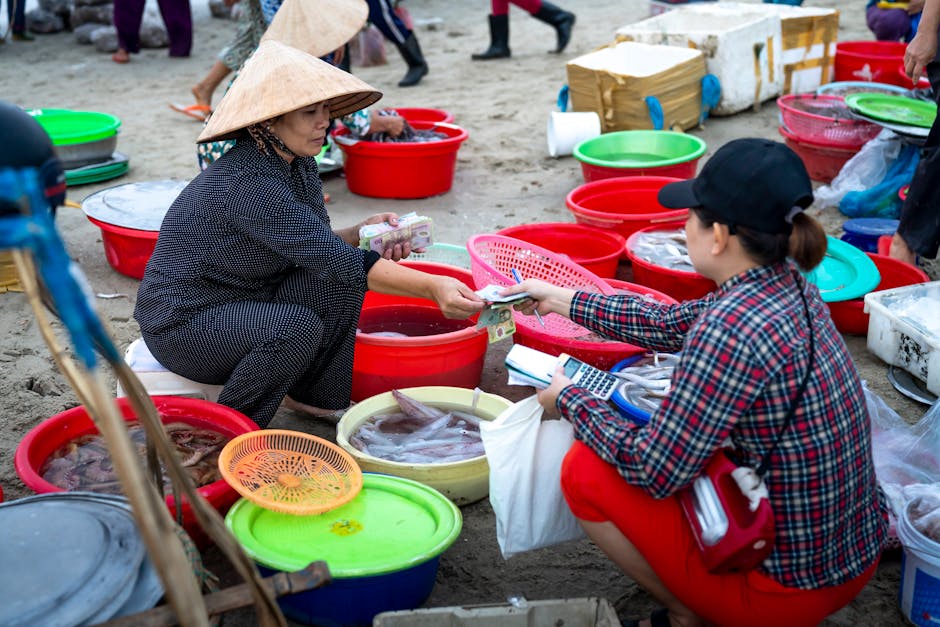
QR payment is now the standard at Ben Thanh Market in Ho Chi Minh City, Dong Xuan Market in Hanoi, and neighbourhood markets nationwide. The vendor displays a QR code, you scan it, and the payment settles in seconds.
Do Vietnamese street markets accept card payments?
No. Street market vendors do not have card terminals. Your Visa, Mastercard, Apple Pay, and Google Pay will not work at the stalls.
Markets operate on QR payments. Every vendor who accepts electronic payment displays a VietQR code. That code connects to their Vietnamese bank account, which your foreign cards cannot access directly.
How does QR payment work at Vietnamese markets?
The vendor shows you a static QR code, usually printed and laminated or displayed on their phone. You open LocalPay, scan the code, type in the amount in Vietnamese dong, and confirm. The vendor receives the payment immediately.
You do not need to speak Vietnamese or negotiate the currency. The price is in dong, you enter the same number, and the payment goes through. Most vendors will show you the price on a calculator or their phone.
Which markets in Vietnam accept QR payments?
All major tourist markets accept QR codes: Ben Thanh Market and Binh Tay Market in Ho Chi Minh City, Dong Xuan Market and the Old Quarter weekend night market in Hanoi, Han Market in Da Nang, and Dong Ba Market in Hue.
Smaller neighbourhood markets across Vietnam also accept QR payments. Adoption is near-universal. If a vendor takes electronic payment at all, they take QR. The only stalls that remain cash-only are those that do not accept any electronic payment.
Can I use MoMo or ZaloPay at Vietnamese markets?
Yes, if you have a Vietnamese bank account to connect them. MoMo and ZaloPay are Vietnamese apps that require a Vietnamese phone number and bank account or domestic card to top up.
Tourists on short-stay visas cannot open Vietnamese bank accounts, so MoMo and ZaloPay are not practical options. LocalPay solves this by letting you top up with your foreign Visa, Mastercard, Apple Pay, or Google Pay, then pay any vendor that accepts QR codes.
What if the vendor does not display a QR code?
Ask. Many vendors have a QR code but do not display it prominently. Say 'QR code?' or point to your phone. The vendor will either show you the code or tell you they only take cash.
If they only take cash, pay in dong. Withdrawing a small amount from an ATM once or twice during your trip covers the few remaining cash-only transactions.
Do I need to bargain differently when paying by QR?
No. Bargaining works the same way whether you pay by QR or cash. Agree on the price first, then pay however you prefer.
Some tourists worry that vendors will inflate prices for QR payments. This does not happen. The price is the price. QR payment is faster and more convenient for the vendor, so there is no incentive to discourage it.
Is paying by QR at markets safe?
Yes. You scan the vendor's code, you enter the amount, and you confirm. The vendor cannot change the amount or access your wallet. You control every step.
QR codes at markets are static codes tied to the vendor's bank account. They do not contain transaction amounts or links to external sites. Scan, type the agreed price, pay. That is the entire process.
“QR payment is now the standard at Ben Thanh Market, Dong Xuan Market, and neighbourhood markets nationwide.”
Tips for paying at Vietnamese street markets
- Download LocalPay before you arrive in Vietnam and top up with your foreign card so you can pay immediately at the first market.
- Agree on the price with the vendor before you scan the QR code, just as you would if paying cash.
- Check the amount you type matches the agreed price in Vietnamese dong before you confirm the payment.
- Keep a small amount of cash (200,000-500,000 VND) for the rare vendor who only takes cash.
- Markets in tourist areas (Ben Thanh, Dong Xuan) have near-100% QR adoption, while smaller neighbourhood markets may have a few cash-only stalls.
Vietnamese street markets are no longer cash-only. QR payment is the norm, and it works exactly the same way at a market stall as it does at a cafe or restaurant.
LocalPay lets you pay at any market in Vietnam without a Vietnamese bank account. Top up with your foreign card, scan the vendor's QR code, and pay in seconds.
Frequently asked questions
Yes. Most vendors at Ben Thanh Market in Ho Chi Minh City accept QR payments. Scan the vendor's QR code with LocalPay and pay in Vietnamese dong without needing cash or a Vietnamese bank account.
No. LocalPay works on WiFi or your home country mobile data. You do not need a Vietnamese SIM card to scan QR codes and pay at markets.
You confirm the amount before the payment goes through. If you type the wrong number, cancel and start again. Once confirmed, the payment is instant and cannot be reversed, so double-check the amount matches the agreed price.
Yes. Night markets in Hanoi, Da Nang, and Ho Chi Minh City accept QR payments at most stalls. Vendors display QR codes just as they do during the day.